
FEATURED » WAR & PEACE
Reckless Congress ‘Declares War’ on Russia. Umstrittene ResolutionRepublikaner Ron Paul klagt an: “US-Kongress erklärt Russland den Krieg”
December 10, 2014 · 0 Comments
thursday december 4, 2014
If anyone thinks I am exaggerating about how bad this resolution really is, let me just offer a few examples from the legislation itself:
The resolution (paragraph 3) accuses Russia of an invasion of Ukraine and condemns Russia’s violation of Ukrainian sovereignty. The statement is offered without any proof of such a thing. Surely with our sophisticated satellites that can read a license plate from space we should have video and pictures of this Russian invasion. None have been offered. As to Russia’s violation of Ukrainian sovereignty, why isn’t it a violation of Ukraine’s sovereignty for the US to participate in the overthrow of that country’s elected government as it did in February? We have all heard the tapes of State Department officials plotting with the US Ambassador in Ukraine to overthrow the government. We heard US Assistant Secretary of State Victoria Nuland bragging that the US spent $5 billion on regime change in Ukraine. Why is that OK?
The resolution (paragraph 11) accuses the people in east Ukraine of holding “fraudulent and illegal elections” in November. Why is it that every time elections do not produce the results desired by the US government they are called “illegal” and “fraudulent”? Aren’t the people of eastern Ukraine allowed self-determination? Isn’t that a basic human right?
The resolution (paragraph 13) demands a withdrawal of Russia forces from Ukraine even though the US government has provided no evidence the Russian army was ever in Ukraine. This paragraph also urges the government in Kiev to resume military operations against the eastern regions seeking independence.
The resolution (paragraph 14) states with certainty that the Malaysia Airlines flight 17 that crashed in Ukraine was brought down by a missile “fired by Russian-backed separatist forces in eastern Ukraine.” This is simply incorrect, as the final report on the investigation of this tragedy will not even be released until next year and the preliminary report did not state that a missile brought down the plane. Neither did the preliminary report – conducted with the participation of all countries involved – assign blame to any side.
Paragraph 16 of the resolution condemns Russia for selling arms to the Assad government in Syria. It does not mention, of course, that those weapons are going to fight ISIS – which we claim is the enemy — while the US weapons supplied to the rebels in Syria have actually found their way into the hands of ISIS!
Paragraph 17 of the resolution condemns Russia for what the US claims are economic sanctions (“coercive economic measures”) against Ukraine. This even though the US has repeatedly hit Russia with economic sanctions and is considering even more!
The resolution (paragraph 22) states that Russia invaded the Republic of Georgia in 2008. This is simply untrue. Even the European Union – no friend of Russia – concluded in its investigation of the events in 2008 that it was Georgia that “started an unjustified war” against Russia not the other way around! How does Congress get away with such blatant falsehoods? Do Members not even bother to read these resolutions before voting?
In paragraph 34 the resolution begins to even become comical, condemning the Russians for what it claims are attacks on computer networks of the United States and “illicitly acquiring information” about the US government. In the aftermath of the Snowden revelations about the level of US spying on the rest of the world, how can the US claim the moral authority to condemn such actions in others?
Chillingly, the resolution singles out Russian state-funded media outlets for attack, claiming that they “distort public opinion.” The US government, of course, spends billions of dollars worldwide to finance and sponsor media outlets including Voice of America and RFE/RL, as well as to subsidize “independent” media in countless counties overseas. How long before alternative information sources like RT are banned in the United States? This legislation brings us closer to that unhappy day when the government decides the kind of programming we can and cannot consume – and calls such a violation “freedom.”
The resolution gives the green light (paragraph 45) to Ukrainian President Poroshenko to re-start his military assault on the independence-seeking eastern provinces, urging the “disarming of separatist and paramilitary forces in eastern Ukraine.” Such a move will mean many more thousands of dead civilians.
To that end, the resolution directly involves the US government in the conflict by calling on the US president to “provide the government of Ukraine with lethal and non-lethal defense articles, services, and training required to effectively defend its territory and sovereignty.” This means US weapons in the hands of US-trained military forces engaged in a hot war on the border with Russia. Does that sound at all like a good idea?
There are too many more ridiculous and horrific statements in this legislation to completely discuss. Probably the single most troubling part of this resolution, however, is the statement that “military intervention” by the Russian Federation in Ukraine “poses a threat to international peace and security.” Such terminology is not an accident: this phrase is the poison pill planted in this legislation from which future, more aggressive resolutions will follow. After all, if we accept that Russia is posing a “threat” to international peace how can such a thing be ignored? These are the slippery slopes that lead to war.
This dangerous legislation passed today, December 4, with only ten (!) votes against! Only ten legislators are concerned over the use of blatant propaganda and falsehoods to push such reckless saber-rattling toward Russia.
Here are the Members who voted “NO” on this legislation. If you do not see your own Representative on this list call and ask why they are voting to bring us closer to war with Russia! If you do see your Representative on the below list, call and thank him or her for standing up to the warmongers.
Voting “NO” on H. Res. 758:
1) Justin Amash (R-MI)
2) John Duncan (R-TN)
3) Alan Grayson, (D-FL)
4) Alcee Hastings (D-FL)
5) Walter Jones (R-NC)
6) Thomas Massie (R-KY)
7) Jim McDermott (D-WA)
8 George Miller (D-CA)
9) Beto O’Rourke (D-TX)
10 Dana Rohrabacher (R-CA)
Umstrittene ResolutionRepublikaner Ron Paul klagt an: “US-Kongress erklärt Russland den Krieg”
Dienstag, 09.12.2014, 18:23 · von FOCUS-Online-RedakteurinSandra Tjong

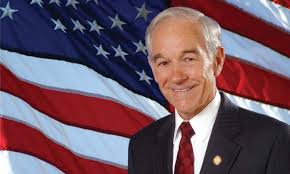
BloombergRon Paul
Hierzulande wurde kaum Notiz genommen von der Resolution 758 des US-Repräsentantenhauses. Nach Einschätzung des früheren amerikanischen Präsidentschaftskandidaten Ron Paul handelt es sich um einen höchst gefährlichen Beschluss: Er warnt vor dem Dritten Weltkrieg.
Ron Paul nennt die Resolution 758 des US-Repräsentantenhauses eines der „schlimmsten Werke von Gesetzgebung“, das jemals beschlossen worden sei. Das Dokument sei „16 Seiten Kriegspropaganda, die selbst Neocons (die Konservativen, Anm.d.Red.) die Schamesröte ins Gesicht treiben würde, wenn sie dazu fähig wären“.
Harte Worte – auch für Ron Paul. Der frühere republikanische Kongressabgeordnete, der 2008 und 2012 als Präsidentschaftskandidat ins Rennen ging, nimmt bei Kritik selten ein Blatt vor den Mund, egal ob ein Republikaner oder ein Demokrat im Weißen Haus residiert.
Was in der Resolution steht
In dem Papier, das das Repräsentantenhaus vergangene Woche mit nur zehn Gegenstimmen beschlossen hat, verurteilen die Abgeordneten die Ukraine-Politik von Russlands Präsident Wladimir Putin auf das Schärfste. Sie werfen Moskau eine „Politik der Aggression“ gegen Nachbarländer vor mit dem Ziel politischer und wirtschaftlicher Dominanz.
- Zur langen Liste der Vorwürfe zählen Russlands Invasion in der Ukraine, die militärische Unterstützung der Separatisten und der Bruch internationaler Abkommen. Allein Russland und die Separatisten werden für das Scheitern der Waffenruhe verantwortlich gemacht. Weiter steht für die Abgeordneten fest: Die Rebellen schossen MH17 ab. Das ist allerdings noch nicht geklärt.
- Putin habe in Russland ein autoritäres Regime errichtet. Daraus folgend erheben die Abgeordneten eine Reihe von Forderungen anBarack Obama. Allen voran rufen sie den US-Präsidenten auf, die Ukraine mit tödlichen und nicht-tödlichen Waffen zu versorgen, Militärtrainings zu ermöglichen und die Sanktionen zu verschärfen.
- Die USA müssten den ukrainischen Präsidenten Petro Poroschenko dabei unterstützen, „dauerhaften Frieden“ in der Ukraine zu errichten. Voraussetzung seien der Rückzug der russischen Truppen, die komplette Entwaffnung der Separatisten sowie eine Politik, die russische Einflussnahme zurückdrängt. Erwünscht ist dagegen ein stärkerer westlicher Einfluss in der Ostukraine: etwa durch den Sender Radio Free Europe. Von Russland fordern die Parlamentarier, sich nicht nur aus der Ukraine, sondern auch aus Moldau und Georgien zurückzuziehen.
Paul warnt vor Drittem Weltkrieg
Ron Paul warnt nun, die Resolution sei eine neue Eskalationsstufe und könne in Krieg ausufern. „Rücksichtsloser Kongress erklärt Russland den Krieg“,betitelt er einen Brandbrief auf der Homepage seines „Ron Paul Institute for Peace and Prosperit“. In seiner Zeit als Kongressabgeordneter habe er festgestellt, dass diese Art von Resolutionen zwar als „harmlose“ Meinungsbekundungen dargestellt würden, oft aber zu Sanktionen und Krieg führten. Als Beispiel führt Paul den „Iraq Liberation Act“ an, den er 1998 vergeblich zu verhindern versuchte. „Ich wusste, das Dokument führt zu einem Krieg.“ Weiter versichert er: „Ich kämpfte nicht dagegen, weil ich ein Bewunderer von Saddam Hussein war – wie ich jetzt auch kein Bewunderer von Putin oder einem anderen ausländischen Staatslenker bin – eher weil ich wusste, dass ein erneuter Krieg gegen Irak nicht die Probleme lösen würde, sondern die Dinge wahrscheinlich verschlechtern würde. Wir wissen alle, was dann geschah.“
By myfuamerica
Sorry, comments are closed on this post.