
WAR & PEACE
The Israeli attack on targets in and around Damascus. Why did the Russian S-300 not prevent Israel to act.
May 6, 2013 · 0 Comments
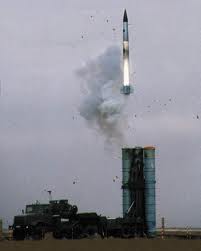
The Israeli attack on targets in and around Damascus raises some questions for which there is no answer.
Three Israeli Air Force strike on targets in Damascus this year have gone unpunished, and were made without any visible signs of resistance from the Syrian air defenses. Also on April 29, the Syrian rebels have published information that the Israeli planes fly over Assad’s palace. Then no one would believe them, and then forget about it.
In defense forces of Syria serves 50,000 soldiers. Damascus is surrounded by a dense network of bases and air defense batteries, and is perhaps one of the most secure capitals in the Middle East. The air cover for the Syrian capital consists of several superimposed layers on top of each other.

Moreover, Damascus is likely covered with Russian S-300, which are among the most advanced in the world.
Officially, the issue of Syrian S-300 is covered in mist. In December 2011, the newspaper Al Quds-Al Arabi reported that the complexes delivered by Russian warships to Tartus. In the summer of 2012 Russia announced the abolition of the sale of S-300 Syria.
However, the fact of the presence of the Syrians C-300 clearly indicates their patron – Iran. Immediately after the first Israeli strike on a research center in JAMRI January 30 Iranian state PressTV published the article “The raid on Syria raises serious questions.” The article is devoted to a very topical issue for the Iranians – why the C-300 did not work?
The article states: “Russia stopped supplying arms to Syria in 2012, but the C-300 are placed in Damascus and around – and that is in the area of the research center, the Israelis bombed.”
C-300 would put Syria Russia and Belarus. April 24, 2013 Belarusian Resources reported with Syria, four batteries of S-300.
The various pro-Syrian resources are also often write about the potential of the C-300, were armed Syrian Arab Army.

PressTV gives the following hint: “The answer to this question may be the fact that the Israelis managed to extensively test all the features of C-300 – due to the fact that the Russian once sold these systems to Cyprus.”
S-300 were purchased by Cyprus from Russia in 1998. Trying to deploy them on the island has caused a fierce campaign of opposition from Turkey. It signed an international agreement, according to which the C-300 have been “warehoused” in Cyprus. The systems were transferred to the joint Greek-Cypriot control according to mutual defense pact of 1993. December 20, 2007 Greece has quietly launched a C-300.
In the last week of May 2008 and the first week of June 2008 over Crete have been large-scale joint air exercise Greece and Israel. The teachings were widely reported in the press. More than 100 Israeli F-16s and F-15s, as well as refueling tankers took part in an impressive number of mock attacks. Israeli aircraft during a training exercise never landed, and refuel in the air. While most observers seemed important to the fact that the Israelis can cover a distance of 1,400 km and to bomb Iran’s nuclear facilities.
While these wonders of the Greek-Israeli tactics abundantly documented in the international press, information about Greek C-300, and their participation in the exercises did not get into the newspapers. Throwing on the C-300 radar hundred fighters, Israel was able to obtain critical information about the vulnerabilities of the system. This information helped to develop methods for killing, suppression and misrepresentation of the Russian system.
Israel called the exercise Glorious Spartan.
The Iranians have complained bitterly to the Greeks on their treachery after the exercise, but the Greeks have assured them that “the system has been turned off.” These assurances, however, few people believed it.
By myfuamerica
Sorry, comments are closed on this post.